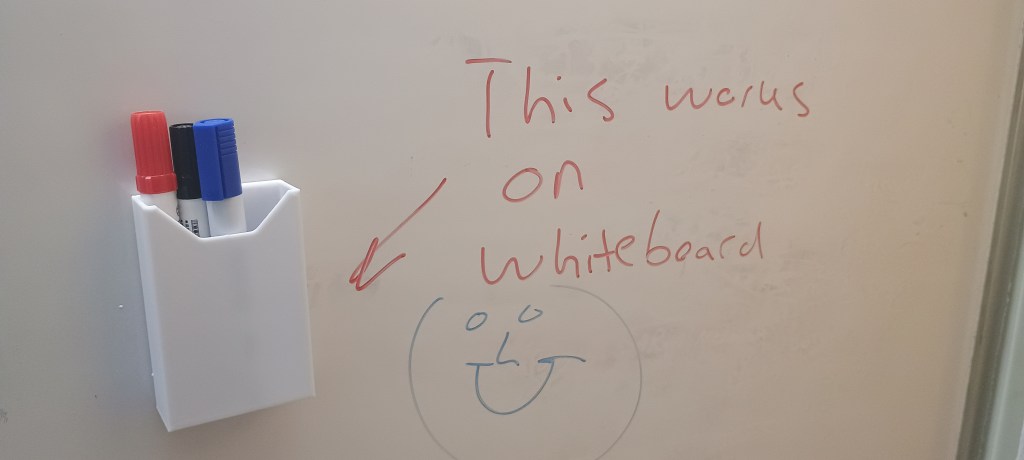
We’ve all heard the saying: “For every minute spent organizing, an hour is earned.” And it’s true—clutter isn’t just physical. Order brings a sense of inner calm, and from chaos often comes simplicity. I’ve realized more and more how important it is to stay organized—especially as my projects grow and new, exciting ones keep popping up.
With limited desk space, my entire room starts to look messy fast. While organising everything is a challenge, there’s one small issue I decided to fix right away: my whiteboard markers.
These are essential tools for me—and probably for you too if you’re a lifelong learner. A whiteboard is like a second brain. It’s personal strategy and planning in one big visual space. It helps me stay focused, gives me a clear view of my day, and keeps me motivated to work on the things that truly matter.
It’s also an amazing tool for brainstorming. Being able to see how everything connects—from ideas for a variable power supply to building drones or robotic arms—gives me that bird’s-eye view I need. And, most importantly, it frees up mental space. Everything is there in front of me, ready to go. Ultimately, your whiteboard should serve you.
I’ve got a big wall-mounted whiteboard, and I’m not complaining—I always run out of space anyway. You can get them in all sizes: handheld, wall-mounted, even floor-standing. But having a clear space means nothing if I’m always looking for the one thing that keeps it useful: the markers.
I kept losing them. I’d put them down somewhere, forget, then scramble around trying to find one before an idea slipped away. More ideas have been lost to missing markers than I’d like to admit. So I did what makers do—I designed my own whiteboard marker holder.
Designing the Solution
I spent a few days working on a 3D-printed holder that attaches magnetically to my whiteboard (which, luckily, is made of metal). I’ll walk you through how I approached the design, chose the form, used CAD software, and finally printed it.

Now, here’s where things got interesting. Even with the fastest 3D printer settings, the model took 6 hours to print. And since my 3D printer sits right next to my bed—and I live in an apartment—I can’t exactly run it overnight without risking noise complaints.
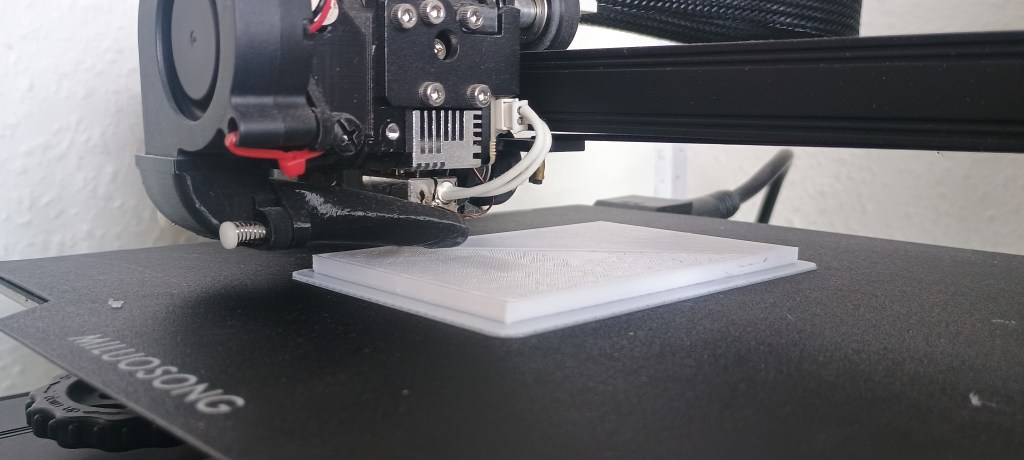
When the print was finally done, I realized I had made an oversight. The magnets weren’t close enough to grip the whiteboard properly—it just fell off. But, inspired by real engineers, I didn’t scrap the whole thing. Instead, I used the magnets inside the model to attach more external magnets, which added the grip I needed. Then came the choice every maker faces: gaffer tape or glue? I went with glue. Longer-lasting, cleaner—and it worked like a charm.
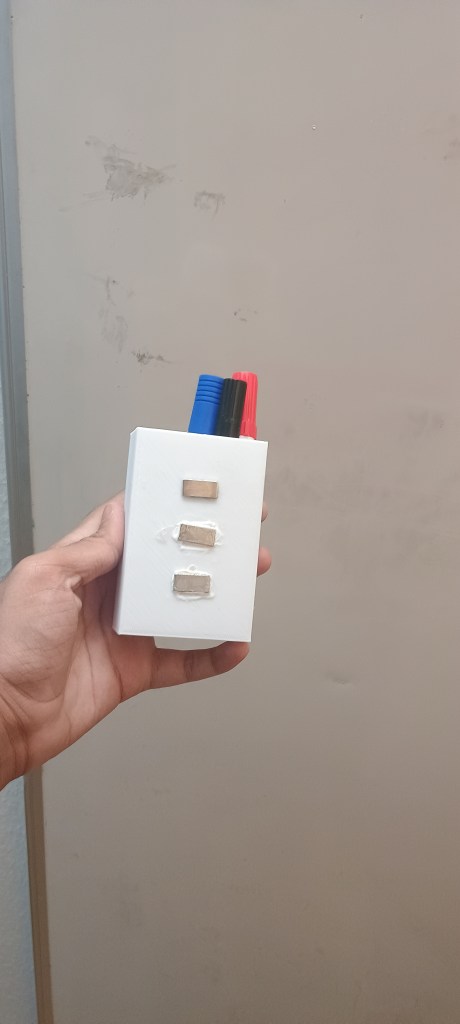
Fail Fast, Fix Faster
This is what engineering is really about: solving problems creatively. I’ve since updated the design, so if this one ever fails again, I can print a fully fixed version. You can download the model here:
- 🔗 Thingiverse
- 🔗 Cults3D
- 🔗 Printables
It’s a small fix, but one that has already saved me from losing ideas and time. And it reminds me—if something doesn’t work, you don’t always have to go back to the drawing board. Sometimes, all it takes is a little glue, a new approach, and some good old creative thinking.
What’s Next?
Next week, I’ll finally publish my variable power supply project, which has been a long time coming. It’s going to unlock a lot of possibilities for future builds, and I can’t wait to share the process—and results—with you all.
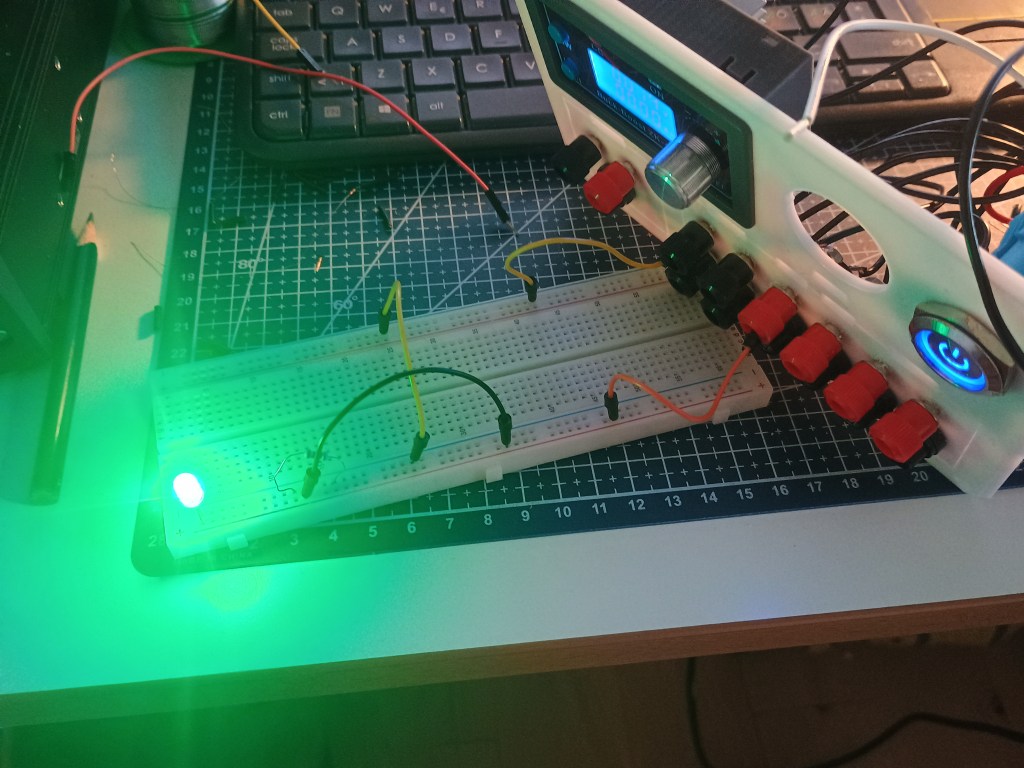
So stay tuned, and remember: a clutter-free space makes room for a clearer mind—and even greater ideas. Let’s keep building, solving, and improving—one idea at a time.

 Ansar's Blog
Leave a comment